
YOU ARE ABOUT TO LEAVE FARXIGA.COM
Please verify that you are a US Healthcare Professional. This information is intended for US Healthcare Professionals only. Are you a US Healthcare Professional?
- FARXIGA FACTS
- HEART FAILURE FACTS
- SAVINGS
The basics on heart failure
Heart failure is when the heart is unable to pump out blood as well as it should. It’s a chronic condition that gets worse over time.
In people with heart failure, the blood can begin to back up and the veins, tissues, and the lungs become filled with fluid. This can make you feel short of breath and can cause swelling in your legs and feet.
What causes heart failure?
As you get older, your risk of developing heart failure increases. Some of the other common risk factors include:
-

High blood
pressure -

Chronic kidney
disease (CKD) -

Diabetes
-

Obesity
-

Smoking
An inside look at heart failure
To help determine what type of heart failure you have and how severe it is, doctors use something called an ejection fraction. An ejection fraction is a measurement (in percentage) of how much blood your heart pumps out to the body with each contraction.
See how heart failure affects the heart
Click a button below to learn more
- Healthy heart
- Heart with HFrEF
- Heart with HFpEF
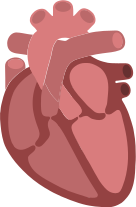
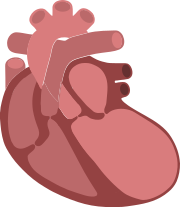
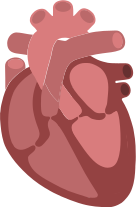
The heart is a muscular pump that squeezes and relaxes to deliver blood to the body.
What it is:
When the heart muscle is weak, so it can’t pump enough blood to keep up with the body’s needs
When the heart contracts:
About 40% or less of the blood from the heart is pumped out
How you may feel:
Even when you’re resting, you might notice symptoms
What it is:
When the heart muscle gets stiff and can’t fill properly, so it pumps out less blood to the body
When the heart contracts:
About 50 to 70% of the blood from the heart is pumped out
How you may feel:
During activity, you might not notice symptoms
IMPORTANT SAFETY INFORMATION
Who should not take FARXIGA?
Do not take FARXIGA if you are allergic to dapagliflozin or any of the ingredients in FARXIGA. Symptoms of a serious allergic reaction may include skin rash, raised red patches on your skin (hives), swelling of the face, lips, tongue, and throat that may cause difficulty in breathing or swallowing. If you have any of these symptoms, stop taking FARXIGA and contact your healthcare provider or go to the nearest hospital emergency room right away.
What are the possible side effects of FARXIGA?
FARXIGA may cause serious side effects including:
- Ketoacidosis. FARXIGA can cause ketoacidosis, a serious condition which may require hospitalization and lead to death. People with type 1 diabetes, type 2 diabetes, or pancreas problems have a high risk of getting ketoacidosis. Signs and symptoms may include nausea, tiredness, vomiting, trouble breathing, abdominal pain, and ketones in your urine or blood. If you get any of these symptoms, stop taking FARXIGA and call your healthcare provider right away. If possible, check for ketones in your urine or blood, even if your blood sugar is less than 250 mg/dL
- Dehydration (the loss of body water and salt), which may cause you to feel dizzy, faint, lightheaded, or weak, especially when you stand up (orthostatic hypotension). There have been reports of sudden kidney injury in people with type 2 diabetes who are taking FARXIGA. You may be at a higher risk of dehydration if you take medicines to lower your blood pressure, including water pills (diuretics); are age 65 or older; are on a low salt diet, or have kidney problems. Talk to your healthcare provider about what you can do to prevent dehydration including how much fluid you should drink on a daily basis. Call your healthcare provider right away if you reduce the amount of food or liquid you drink, or if you experience vomiting or diarrhea
- Serious urinary tract infections (UTI), some that lead to hospitalization, occurred in people taking FARXIGA. Tell your healthcare provider if you have any signs or symptoms of UTI including a burning feeling when passing urine, a need to urinate often, the need to urinate right away, pain in the lower part of your stomach (pelvis), or blood in the urine with or without fever, back pain, nausea, or vomiting
- Low blood sugar (hypoglycemia) can occur if you take FARXIGA with another medicine that can cause low blood sugar, such as sulfonylureas or insulin. Symptoms of low blood sugar include shaking, sweating, fast heartbeat, dizziness, hunger, headache, and irritability. Follow your healthcare provider's instructions for treating low blood sugar
- Bacterial infections under the skin of the genitals and areas around them. Rare but serious infections that cause severe tissue damage under the skin of the genitals and areas around them have happened with FARXIGA. This infection has happened in women and men and may lead to hospitalization, surgeries, and death. Seek medical attention immediately if you have fever or you are feeling very weak, tired or uncomfortable and you also develop any pain or tenderness, swelling, or redness of the skin in the genitals and areas around them
- Vaginal yeast infections in women who take FARXIGA. Talk to your healthcare provider if you experience vaginal odor, white or yellowish vaginal discharge (discharge may be lumpy or look like cottage cheese), or vaginal itching
- Yeast infection of skin around the penis (balanitis) in men who take FARXIGA. Talk to your healthcare provider if you experience redness, itching, or swelling of the penis; rash of the penis; foul smelling discharge from the penis; or pain in the skin around the penis. Certain uncircumcised men may have swelling of the penis that makes it difficult to pull back the skin around the tip of the penis
The most common side effects of FARXIGA include yeast infections of the vagina or penis, and changes in urination, including urgent need to urinate more often, in larger amounts, or at night.
What should I tell my healthcare provider before taking FARXIGA?
Before you take FARXIGA, tell your healthcare provider:
- all of your medical conditions, including problems with your liver or pancreas
- if you have had diabetic ketoacidosis
- if you have type 1 diabetes, decrease in your insulin dose, serious infection, history of infection of the vagina or penis, history of urinary tract infections, or problems with urination
- if you are on a low sodium diet, going to have surgery, eating less or change in diet, dehydrated, or binge drink
- if you are pregnant, or plan to become pregnant. FARXIGA may harm your unborn baby
- if you are breastfeeding, or plan to breastfeed. It is unknown if FARXIGA passes into your breast milk
- about all the medicines you take, including prescription and nonprescription medicines, vitamins, and herbal supplements
What is FARXIGA?
FARXIGA is a prescription medicine used to:
- reduce the risk of further worsening of your kidney disease, end-stage kidney disease, death due to cardiovascular disease, and hospitalization for heart failure in adults with chronic kidney disease
- reduce the risk of cardiovascular death, hospitalization for heart failure, and urgent heart failure visit in adults with heart failure, when the heart cannot pump enough blood to the rest of your body
- reduce the risk of hospitalization for heart failure in adults with type 2 diabetes and known cardiovascular disease or multiple cardiovascular risk factors
- improve blood sugar control along with diet and exercise in adults and children who are 10 years of age and older with type 2 diabetes
FARXIGA is not for use to improve blood sugar (glucose) control in people with type 1 diabetes.
FARXIGA is not for use to improve blood sugar (glucose) control in people with type 2 diabetes who have moderate to severe kidney problems, because it may not work.
FARXIGA is not for people with certain genetic forms of polycystic kidney disease, or who are taking or have recently received immunosuppressive therapy to treat kidney disease. FARXIGA is not expected to work if you have these conditions.
Please see Prescribing Information and Medication Guide for FARXIGA.
You may report side effects related to AstraZeneca products  .
.
Bookmark this page to access FARXIGA StartSmart at any time
1. Tap the icon.
2. Choose "Add bookmark"
3. Select "Save"
1. Tap the icon
2. Save by selecting the icon


